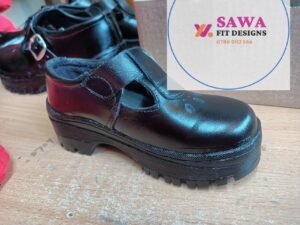
Find the best official school shoes Kenya guide, with practical tips on choosing quality back to school shoes, sizing, and popular brands for comfort and full-day wear.
Official School Shoes Kenya: A Practical Guide to Back to School Shoes
Official school shoes Kenya are a must-have for every student. When school starts again you will need sturdy, comfortable, and properly fitting back to school shoes. A good pair can last a full academic year and help your child stay comfortable from assembly to dismissal. Let’s go through what you need to know so you pick the right pair without stress.
Why Good School Shoes Matter
Your child spends hours on their feet each school day. Shoes that fit well support healthy foot development and reduce blisters, sore spots, and discomfort as they walk, run, or stand. Shoes that are too big or too small cause problems quickly. You want options that match your school’s uniform rules, feel good to wear, and last long. Popular back to school shoes in Kenya are mostly black leather styles with lace-up, buckle or Velcro fastenings, accepted by most schools.
What to Look For in Back to School Shoes
Here are the main features to check when you are choosing shoes:
Material
Genuine leather uppers are common in official school shoes Kenya. They wear better and are easier to polish.
Rubber or durable synthetic soles give good grip on classroom floors and playgrounds.
Fit and Comfort
Shoes should fit true to size with a bit of room at the toe but no slipping at the heel.
Ask your child to walk in them before buying to check pressure points and comfort.
Some brands note that their shoes match established fitting standards like Bata sizes.
Construction and Durability
Reinforced stitching and sturdy soles mean longer life. Leather with a solid, shock-absorbing sole handles daily rough use better.
Padding at the tongue and collar helps prevent rubbing.
School Rules Compliance Most schools in Kenya require plain black closed shoes for boys and girls with no big logos or bright colors. Lace-ups, buckles, or Velcro are standard, but check school policy before buying.
Popular Brands and Options in Kenya
Here are well-known brands and styles you will find locally:
SAWA FIT
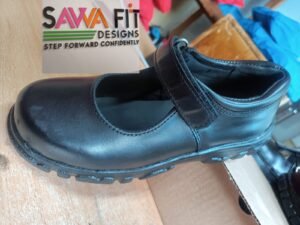
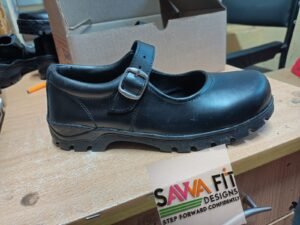
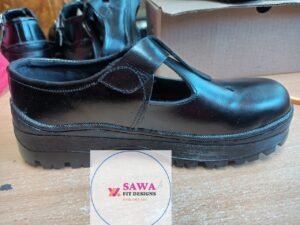
SawaFit is a Kenyan brand known for genuine leather school shoes at accessible prices. They make boys and girls options with buckle or lace closures. Sizes cover both primary and secondary levels. Their shoes are comfortable for long school days and built to last.
Bata and Toughees
Bata’s Toughees line is long established in Kenya as a back to school classic. They are widely stocked. Some parents feel quality varies, so inspect soles and stitching when buying.
Local Leather Shoes
Several Kenyan suppliers handcraft school shoes with leather uppers and rubber soles. These often cost less and are a good choice if quality is acceptable and fit is correct.
International and Premium Options
Imported shoes from brands like Clarks or certain Next Kenya models provide more cushion and ankle support. These cost more but can be softer and more comfortable for some children.
How to Measure and Fit School Shoes
Getting the right size is key. Here’s a simple process you can follow:
Measure Feet: Place your child’s foot on a piece of paper, trace it, and measure the longest and widest parts. Compare this to a shoe size chart.
Try On with Socks: Use the socks your child will wear at school.
Check Toe Space: There should be a thumb’s width between the longest toe and the shoe tip.
Walk and Feel: Ask your child to walk and pay attention to any tight or loose areas.
If you are shopping online, compare sellers that list size guides and return policies. Many local online shops offer free returns if the fit is off.
Price Ranges for School Shoes in Kenya
School shoe prices in Kenya vary based on materials and brand. You can find:
Budget (KSh 500–1,000)
Basic synthetic shoes or canvas options. Good for short-term use or younger children.
Mid-Range (KSh 1,000–3,000)
Genuine leather options from local brands like SAWA FIT and basic Bata offerings. These balance cost and durability.
Premium (KSh 3,000–8,000+)
Imported brands or highly cushioned models. Might offer more comfort and longer wear life.
Prices shift during the back to school season as retailers push sales, so shop early to avoid stock issues.
Where You Can Buy Official School Shoes
You have several options:
Retail Shoe Stores Sawafit, speciality shoe retailers, and branded stores often carry a full range of school shoes. Staff can help with fitting.
Supermarkets and Chains Naivas, Carrefour, and Quickmart sometimes stock school shoes, especially when terms begin.
Online Marketplaces Platforms like Jumia Kenya and Kilimall let you filter by size, material, and price. Read ratings and check return policies before ordering.
Local Markets and Independent Shops Markets such as Gikomba offer low-cost options, but quality and fit vary widely; check construction before buying. (Sawafit)
Caring for Your School Shoes
Good care makes shoes last longer:
Clean after use. Wipe off mud and dust.
Polish leather shoes to keep them sharp and add a protective layer.
Dry wet shoes naturally by stuffing newspaper inside.
Rotate shoes if you have more than one pair so each set gets a break.
Common Mistakes to Avoid
Buying shoes too large to “grow into.” Big shoes cause slipping and blisters.
Choosing purely on price without checking materials.
Buying without trying on (unless the seller has a good return policy).
Quick Fit Checklist
✔ Match school uniform rules ✔ Leather or durable upper ✔ Proper length and width fit ✔ Sturdy rubber sole ✔ Comfortable inside padding
Getting official school shoes Kenya right makes school mornings easier and keeps your child comfortable all day. With the right fit, durable materials, and a pair that meets your school’s rules you are ready for the next term with confidence. Pick carefully based on your child’s needs and school standards, and you will avoid common fitting and wear problems.